- We Study Funnels
- Posts
- The Conqueror Tokyo Challenge: Selling the Medal, Not the Miles
The Conqueror Tokyo Challenge: Selling the Medal, Not the Miles

Corey Philip
March 17, 2026

When I first saw this ad, I immediately understood what they were doing.
And it has very little to do with fitness.
Your instinct might be to think this is a virtual race company. A fitness app. A wellness program.
It’s not.
This is achievement commerce.
And it’s engineered extremely well.
In this post:
Step 1: The Ad — Selling the Medal, Not the Miles
The ad positions the Tokyo Virtual Challenge as a 45-mile journey through Tokyo, completed at your own pace, through any activity.


But look at what leads the messaging:
Glow-in-the-dark medal
Tangible physical award
Visual prestige
Community participation
Not weight loss.
Not cardiovascular health.
Not VO2 max improvement.
The medal is the hero.
That’s deliberate.
This brand understands something most fitness companies don’t:
The middle-aged, non-competitive demographic doesn’t crave performance.
They crave completion.
This is the same psychology behind:
Participation trophy culture
Unsanctioned 5K runs charging $200+
Glorified finish lines with smoke machines and medals
People are not paying for athletic competition.
They’re paying for symbolic achievement.
And this company monetizes that insight cleanly.
Step 2: The Landing Page — Removing All Failure Risk
Once you land on the page, the positioning continues flawlessly.
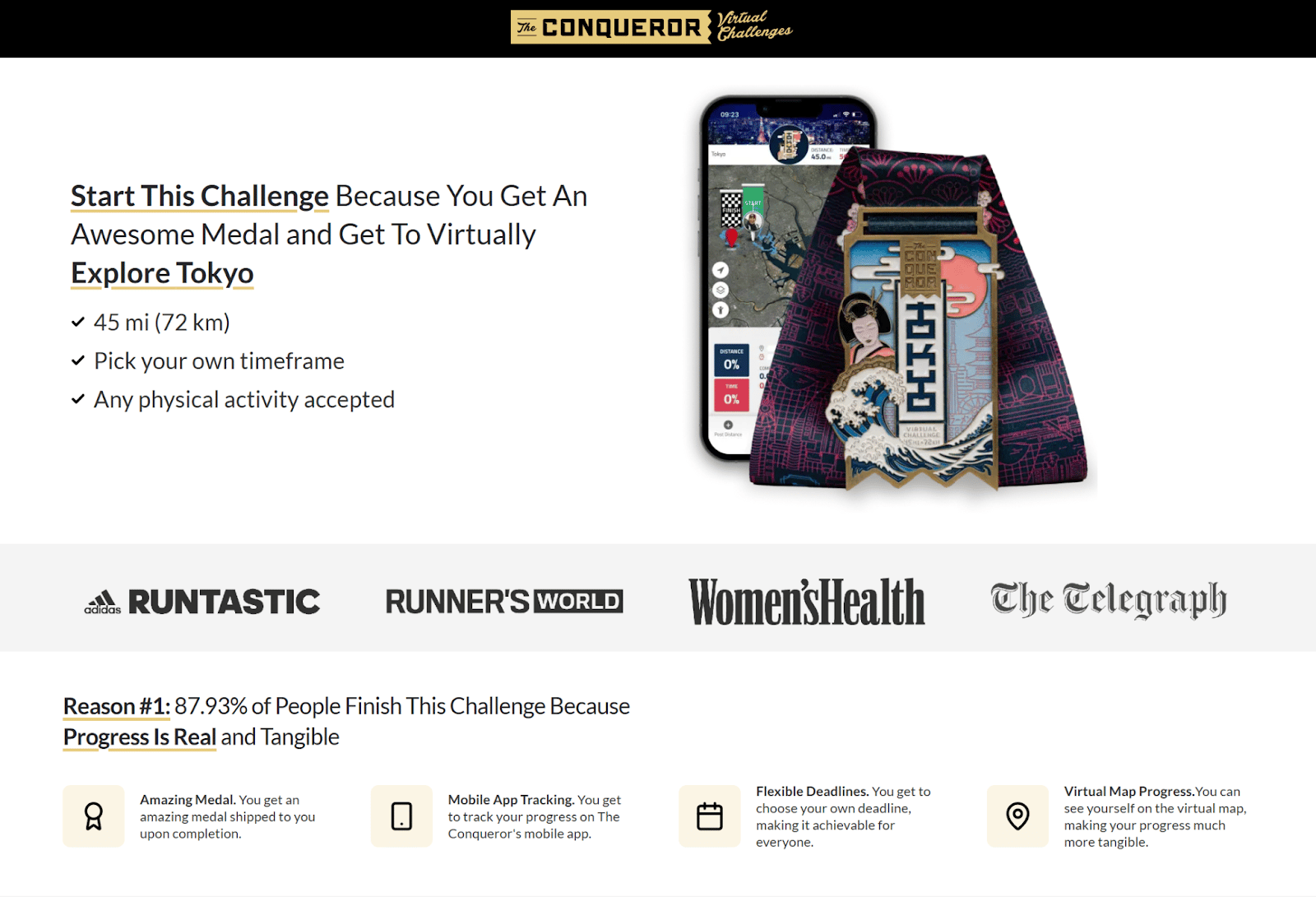
The first promise:
You get an awesome medal and explore Tokyo.
Again — medal first.
Then they immediately dismantle every possible objection:
Pick your own timeframe
Any physical activity counts
Flexible deadlines
Automatic tracking
87.93% finish rate
That stat is brilliant.
It removes the biggest barrier in fitness:
Fear of not finishing.
They are effectively saying:
“You cannot fail.”
This isn’t competitive fitness.
This is engineered completion.
And that’s powerful for the audience they’re targeting.
The testimonials reinforce it too:
“I’ve never been good at exercising.”
“This helped me get off the couch.”
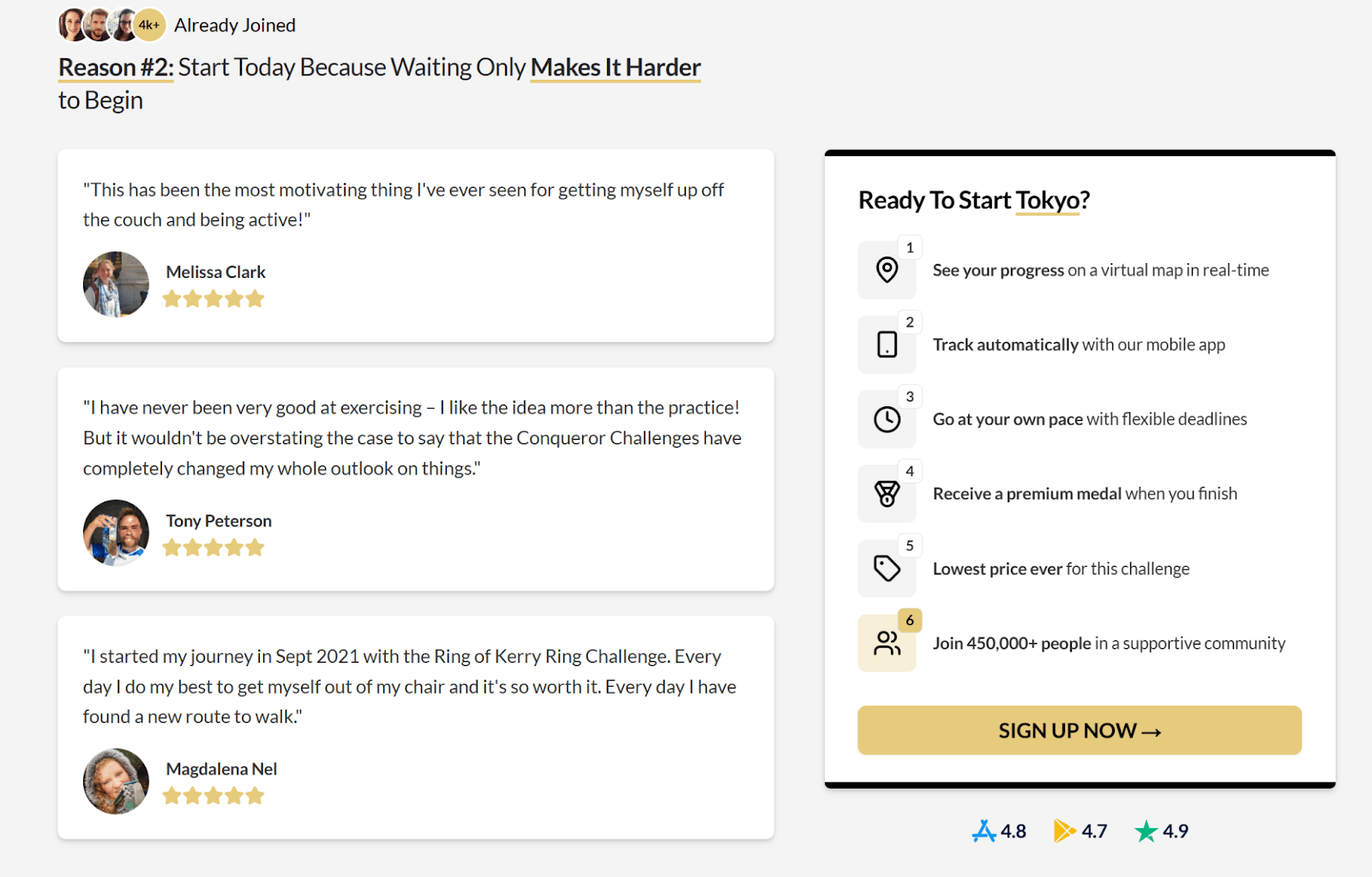
They are normalizing beginner identity.
This is a funnel built for people who like the idea of being active more than they like the act itself.
Step 3: The Funnel Structure — Simple, Direct, Low Friction
Ad → Long-form landing page → Checkout form

That’s it.
No quiz.
No segmentation.
No complicated upsell stack visible.
It’s a single-product commitment funnel.
This tells me the product price point is likely moderate (not high-ticket), and the monetization model depends on:
Repeat medal purchases.
This is collectible psychology.
Tokyo today.
Rome next.
New York after that.
Each medal becomes a badge in a growing personal identity.
That’s how LTV is created here.
The Real Product: Structured Validation
The niche participation medal is actually the strategic key.
What they’re selling is:
Externally validated progress.
People want:
A start line
A finish line
A certificate
A physical object that proves they did something
The app and map are supporting tools.
The medal is the emotional payload.
This is gamified accountability wrapped in a physical reward.
And that’s why it converts.
Where This Funnel Is Strong
From a conversion standpoint, they’ve nailed:
✔ Emotional clarity
✔ Audience targeting
✔ Fear removal
✔ Tangible outcome
✔ Simple checkout path
✔ Social proof alignment
There’s no confusion about what you’re buying.
You’re buying:
A structured win.
Where I’d Optimize
No funnel is perfect.
Here’s where I’d improve it:
1️⃣ Price Anchoring
They should compare themselves directly to traditional 5K entries.
“Most fun runs cost $150–$250. Ours costs less and you can’t fail.”
That would massively increase perceived value.
2️⃣ Bundle Upsells
At checkout:
“Add Rome Challenge for 20% off.”
Simple AOV lift.
Given their collectible model, this is low-hanging fruit.
3️⃣ Continuity Model
I’d test:
Conqueror Club — automatic new medal every quarter.
That turns this from one-off commerce into recurring revenue.
4️⃣ Email Monetization
If they aren’t:
Sending milestone celebration emails
Triggering cross-sell when someone hits 50% completion
Offering loyalty bundles after completion
Then they’re leaving backend revenue on the table.
This model thrives on repeat engagement.
Final Take
This funnel is not about fitness.
It’s about accessible accomplishment.
It targets:
People who want the feeling of achievement without the pressure of competition.
And that’s a massive market.
They’ve identified a behavioral truth:
Most people don’t want to compete.
They want to complete.
And they’re monetizing it with a physical artifact.
From an operator standpoint?
It’s a clean example of:
Psychology-first product design.
And when psychology is clear, conversion follows.